Tuesday, May 26, 2009
Crows and Pickup Trucks
Driving in to work one morning in May I spied a crow on the back of a pickup truck parked in the lot. This crow was having the best time walking around the edge of the bed checking out the contents. Every now and then he'd hop and swoop down to inspect the contents with his beak. Crows are great foragers in our urban environments. I'm hoping he found some tasty leftovers. -- Jenny


Under the Eaves
So many of our libraries now include cafe's that I feel mine has been left out of the revolution. University of Arizona in Tucson has such fine weather that the coffee spot is enclosed under the eaves with the dining space out in the open, though still under the eaves in the shade. It was a delightful place to have lunch in March. -- Jenny

Handouts
While visiting libraries I found myself dithering about taking handouts. As I analyzed this inhibiting feeling I discovered a few things. First that proximity to authority made a great deal of difference. If the handouts were located ON the desk, I was less likely to take one. If they were located (as the ones are in this picture-Provo City Public Library) away from the close supervision of librarians, I would take one of everything. (Ask me about my binders of handouts sometime).
Another factor was number of handouts available. If there were only a few, say 5 or so, I was less likely to take a handout for fear of shorting someone who really needed one. On the other hand, if it was a spectacular handout such as the "Squeaky Clean and No Caffeine" I'd take it anyway. So style/substance did make a difference. If it was more generic/informative I would leave it if there were only a few.
Lastly, and building on the above if the handouts were branded with the library logo/info in an attractive way I definitely wanted it. I was also fascinated by the different donor type brochures, though few libraries included these items in their general handout racks in the public areas.
In summary:
1. Make your handouts/brochures attractive and give them appealing or catchy names/titles.
2. Locate them in visible areas away from the official service desks.
3. Include the types for making donations/gifts to the library.
My two cents.
Jenny
Who never changed her behavior about taking handouts as she went along. Too worried that someone else might really NEED that last handout/brochure.

Another factor was number of handouts available. If there were only a few, say 5 or so, I was less likely to take a handout for fear of shorting someone who really needed one. On the other hand, if it was a spectacular handout such as the "Squeaky Clean and No Caffeine" I'd take it anyway. So style/substance did make a difference. If it was more generic/informative I would leave it if there were only a few.
Lastly, and building on the above if the handouts were branded with the library logo/info in an attractive way I definitely wanted it. I was also fascinated by the different donor type brochures, though few libraries included these items in their general handout racks in the public areas.
In summary:
1. Make your handouts/brochures attractive and give them appealing or catchy names/titles.
2. Locate them in visible areas away from the official service desks.
3. Include the types for making donations/gifts to the library.
My two cents.
Jenny
Who never changed her behavior about taking handouts as she went along. Too worried that someone else might really NEED that last handout/brochure.
Sunday, May 10, 2009
Idaho Library Association Northern Region Meeting
Keynote: Dr. Darin Saul ‘Improving the Sustainability of Your Library’
What I got out of it:
Session 1: Gina Persichini – Rethinking Resource Sharing
What I got out of it:
Session 2: I was teaching this one so …
Session 3: Michael Greenlee – Free Legal Research Tools
What I got out of it:
Review of who produces legal materials
P.S. Answers to legal questions often require using more than one source.
Session 4: Ramirose Attebury – Cultural Stereotypes of Librarians in YouTube Videos
What I got out of it:
Probably the most fun session there, certainly my favorite.
8 stereotypes
To change the image of a profession it is suggested that Parody may be more effective than fun/positive.
Psycho is only found in customer service aspect
For a look at her presentation on slideshare at: http://www.slideshare.net/rosebudy23/librarian-depictions-on-youtube
However, her YouTube video selections are not included. Sorry. Maybe she’ll add that later.
Great conference!
Jenny

What I got out of it:
- Little things can add up to a big difference i.e. reusable bags, turning off lights, energy efficient light bulbs.
- Check out the LEED system for green buildings (http://www.usgbc.org/)
- Change the default power settings on computers to have them hibernate instead of standby.
- Buy energy rated appliances – including copiers
- Minimize use first
- Double sided printing
- Prefer electronic to paper
- Purchase recycled content
- Lease computers so they are recycled by manufacturers instead of purchase
- Sometimes if you have a large or voluminous amount to recycle special arrangements can be made with the recyclers to pick up and deal with it. i.e. big piles of books
Session 1: Gina Persichini – Rethinking Resource Sharing
What I got out of it:
- More availability fewer restrictions
- User choice on format
- Access from anywhere anytime
- Share resources with all types of cultural institutions (i.e. archives, museums…)
- Do we need to catalog ‘expertise’ or maybe keep some kind of log
- Perhaps more Mr.Oboler type delicious accounts for experts in the area
- No findable object should be totally unattainable
- Offer service for a fee rather than refusing service
- See: http://rethinkingresourcesharing.org/manifesto.html
Session 2: I was teaching this one so …
Session 3: Michael Greenlee – Free Legal Research Tools
What I got out of it:
Review of who produces legal materials
- Federal
- State
- City/County/Local
- Judicial
- Executive
- Legislative
- Constitutions
- Statutes
- Case Law
- Regulations
- Practice materials and secondary sources (encyclopedias, treatises, ALR, AmJur, forms…)
- State of Idaho http://www.accessidaho.org/
- Idaho Legislature http://www.legislature.idaho.gov/
- Idaho Judiciary http://www.isc.idaho.gov/
- Court Assistance Office http://www.courtselfhelp.idaho.gov/
- Idaho Administrative Rules http://adm.idaho.gov/adminrules/
- Idaho Administrative Agencies http://idaho.gov/agency/agency_a.html
- Idaho Executive Branch http://www.idaho.gov/government/executive.html
- Idaho Governor http://gov.idaho.gov
- Idaho Attorney General http://www2.state.id.us/ag
- USA.gov http://www.usa.gov
- GPO Access http://thomas.loc.gov
- CRS Reports http://opencrs.com
- U.S. Supreme Court http://www.supremecourtus.gov
- Law Library of Congress http://www.loc.gov/law
- Electronic Information System for International Law (EISIL) http://www.eisil.org/
- Cornel Legal Information Institute http://www.law.cornell.edu
- Findlaw http://lp.findlaw.com/
- LexisOne http://law.lexisnexis.com/webcenters/leixone/
- Georgetown Law Library http://www.ll.georgetown.edu/
- University of Idaho Law Library http://www.law.uidaho.edu/
P.S. Answers to legal questions often require using more than one source.
Session 4: Ramirose Attebury – Cultural Stereotypes of Librarians in YouTube Videos
What I got out of it:
Probably the most fun session there, certainly my favorite.
8 stereotypes
- Old maid
- Policeman
- Inept (socially awkward or bad customer service)
- Hero/heroine
- Parody
- Really fun/Positive
- Sexy
- Psycho
To change the image of a profession it is suggested that Parody may be more effective than fun/positive.
Psycho is only found in customer service aspect
For a look at her presentation on slideshare at: http://www.slideshare.net/rosebudy23/librarian-depictions-on-youtube
However, her YouTube video selections are not included. Sorry. Maybe she’ll add that later.
Great conference!
Jenny
Thursday, April 30, 2009
ULA: my last session
CyberInfrastructure Session
For the most part this was a bit over my head and not really applicable to what I do. However, the last bit had a few gems. First BYU has had a decrease in usage of the hardwired computers in the information commons. A reduction to the tune of 50%. Wireless computing has increased until recently and has leveled off. The presenter believes that this too will decrease as more portable cell phone type devices begin to be used such as his iPhone and wireless network cards like the ones offered by Verizon. We need to think about mobile computing and how/where it will impact us.
Cool sign in his presentation: No Shhhh Zone
For the most part this was a bit over my head and not really applicable to what I do. However, the last bit had a few gems. First BYU has had a decrease in usage of the hardwired computers in the information commons. A reduction to the tune of 50%. Wireless computing has increased until recently and has leveled off. The presenter believes that this too will decrease as more portable cell phone type devices begin to be used such as his iPhone and wireless network cards like the ones offered by Verizon. We need to think about mobile computing and how/where it will impact us.
Cool sign in his presentation: No Shhhh Zone
Tuesday, April 28, 2009


Shops
Another view of the shops in the atrium area. There is a lot of natural light in this building.

Study spaces
The view of the study areas. I was standing on the staircase on the library side looking out over the atrium.


Auditorium
Public libraries are definitely community centers with auditoriums, theaters and other amenities.


Stairs and art
The mobile moves and is made of books that are butterflies, or butterflies that are books. Depends entirely on your point of view.


Weber County Library
I began my sabbatical in Utah, specifically Ogden. I did not realize my camera had difficulties till I got to Phoenix. Needless to say, the photos are less than I would like them to be and not just because I take crappy photos.

Spanish Language Collection
Excellent collection of Spanish language materials. I found many public libraries in my sabbatical had this type of collection.


Subject Table
Reference tables with subject specific resources i.e. citations, poetry, demographics...


Library Art
Having assigned a paraprofessional librarian to be a full-time "friends" librarian has paid off. They have been able to buy art with some of the money received.


Friday, April 24, 2009
Favorite Session: Can Library Instruction Be Fun, Yet Effective?
Presenters were Crystal Goldman, Dale Larsen, and Adriana Parker of Marriott Library at the University of Utah. (I had met Dale and Adriana during my sabbatical) They teach an extraordinary number of sessions, up to 45 in a two week period...
Basically they were talking about two active learning methods, Cephalonian and Jigsaw. In summation the Jigsaw method is about small group work and having the groups present on the discovery of the database they were asked to analyze. This works best with large classes 20+ with enough time.
What really hooked me on this workshop was the Cephalonian method. They used the method to teach us the method. It involves a set of colored index cards which are passed out to the audience. (An audience member suggested that shapes could be used instead. Also it was noted that the color of the card should be placed on the card for those who may be color blind.) Each card has a question on it that will be asked when a color card is asked for. The questions are put together by the teacher who then creates a corresponding powerpoint that answers the questions.
BIG TIP: To go to a specific slide in powerpoint, type in the number and press enter. This will pop open the slide you want seamlessly. This is really nifty and makes the teacher look like a mind reader.
For more information on the Cephalonian method check out the article in Wikipeda. Or rather, check out the references at the bottom! Nigel Morgan is one of the originators of this very interactive active learning method.
The other really excellent part of the powerpoint was the pictures of a hired actor who portrayed various patron stereotypes including sleeping student, typhoid patron, and inappropriate viewing guy...
The presenters were entertaining, interactive and managed to keep this last session of the day well worth attending.
Basically they were talking about two active learning methods, Cephalonian and Jigsaw. In summation the Jigsaw method is about small group work and having the groups present on the discovery of the database they were asked to analyze. This works best with large classes 20+ with enough time.
What really hooked me on this workshop was the Cephalonian method. They used the method to teach us the method. It involves a set of colored index cards which are passed out to the audience. (An audience member suggested that shapes could be used instead. Also it was noted that the color of the card should be placed on the card for those who may be color blind.) Each card has a question on it that will be asked when a color card is asked for. The questions are put together by the teacher who then creates a corresponding powerpoint that answers the questions.
BIG TIP: To go to a specific slide in powerpoint, type in the number and press enter. This will pop open the slide you want seamlessly. This is really nifty and makes the teacher look like a mind reader.
For more information on the Cephalonian method check out the article in Wikipeda. Or rather, check out the references at the bottom! Nigel Morgan is one of the originators of this very interactive active learning method.
The other really excellent part of the powerpoint was the pictures of a hired actor who portrayed various patron stereotypes including sleeping student, typhoid patron, and inappropriate viewing guy...
The presenters were entertaining, interactive and managed to keep this last session of the day well worth attending.
Lunch Speaker: Amanda Dickson, KSL Newsradio
Dickson talked about happiness, and how, perhaps it is a commodity not just a state of being. She says that you can't wait till circumstances are perfect to be happy, but that you need to enjoy life as it happens. The basis of happiness is in forgiveness. Not for some spiritual lofty reason, but in order to move beyond the injuries and insults of daily life. Forgiving self and others allows one to be happy in the day or the moment. Releasing the self-talk and rumination of 'bad things that happened so I can't be happy' by forgiving and moving on. Pretty interesting actually.
Monday, November 03, 2008
Parking Lot Denzien
This adorable bunny is living in the back parking lot of the library. I've seen it off and on for the past few weeks. I chased it around the parking lot taking pictures last week.

Wednesday, October 22, 2008
An Idea
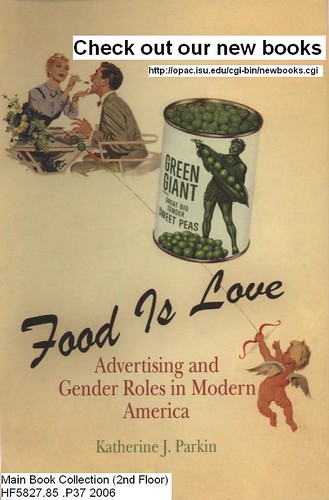
I get tired of boring verbiage laden screen-savers in the library, don't you? Well, I had a brainwave a few weeks ago and I'm so happy it is working. Here are the steps and everyone is welcome steal this idea.
1. Find a bunch of book jackets/book covers/books. You'll want 30 - 40 so you won't have to update the screen saver very often.
2. Find a smart employee (here, her name is Emily), have her scan the books covers and create .jpgs. After scanning, have the clever boots add text about Books in the Library and the call numbers.
3. This step may be optional, but for us, we had to get buy-in from our systems department. They had to do the critical thing of going to every computer and deleting all photos from the My Pictures folder replacing them with the book .jpgs.
4. Next the systems people changed the screen-saver to the one that rotates pictures from the My Pictures folder.
5. Done
It works beautifully. We are very happy with this. It showcases new and interesting books.
To check out our book jackets see our flickr account at: http://www.flickr.com/photos/31338811@N08/
-- Jenny
Monday, October 20, 2008
Art in the Library - Univ. of Alaska, Anchorage
Foucault's Pendulum "Still Proving the Earth Rotates" and hung in a prominent spot in this fabulous library.

Art in the Library - Univ of Alaska, Fairbanks
Paper. Several years ago there was an exhibit of paper sculptures in the library. They decided to purchase this fabulous raven.

Art in the Library - Univ. of Alaska - Fairbanks
A collection of prints by Fred Machetanz hang gallery style in the library. They are wonderful!

Art in the Library - Univ of Alaska, Anchorage
Anchorage had lots of great photographs in the library. This is one of my favorites.

Tuesday, October 14, 2008
Signage - University of Alberta, Edmonton
There are actually three signs, this is the best photo. It is for the quiet floor, there are additional signs for the silent floor and the common floor.
The Quiet Floor
The Silent Floor
The Common Floor

The Quiet Floor
"You are entering a
Quiet Floor
This floor is designated as quiet study space. Please respect the need for a quiet work space.
Quiet conversations can be expected"
The Silent Floor
"You are entering a
Silent Floor
This floor is designated as silent individual study space. Please respect the need for a silent work space.
No talking please"
The Common Floor
"You are entering a
Common Floor
This floor is designated as for group study and works space.
Conversational noise can be expected"
ILA: Plugging into the Numbers
by Gillian Harrison of BCR
We collect a lot of data in our libraries. Gillian's presentation began with what kinds of data can be collected and then turned its focus to how to present the data.
She showed charts, graphs, graphics, visuals... and had us assess their effectiveness in presenting the information.
Here are some more soundbites/notes
Before beginning a data project, determine who is going to pull/gather/manipulate the data. Decide which data will be collected and who has the password.
Data can be collected from in-house operations, vendors, professional organizations, Pew (http://www.pewinternet.org) and OCLC.
There are standards for data collection for journals and databases. To see these standards take a look at http://www.projectcounter.org
Make friends with your data. Look for baselines, trends and patterns.
Manipulate your data, simplify, compare and picture it.
Ask yourself, is this data point really valuable? Is it adding to the message or just adding noise?
Define your audience (and their data sophistication) What are you trying to say to them?
Is it an update, funding request, justification/explanation, information, shock or impact?
What outcome are you looking for?
Choose where and how to present the data. (venue, media, voice)
This was a very useful workshop. I am really glad I went cause I have a mountain of data to try and make into useful and useable information. Additionally, I'm going to change the first slide of my Wandering presentation to a better more descriptive graphic.
We collect a lot of data in our libraries. Gillian's presentation began with what kinds of data can be collected and then turned its focus to how to present the data.
She showed charts, graphs, graphics, visuals... and had us assess their effectiveness in presenting the information.
Here are some more soundbites/notes
Before beginning a data project, determine who is going to pull/gather/manipulate the data. Decide which data will be collected and who has the password.
Data can be collected from in-house operations, vendors, professional organizations, Pew (http://www.pewinternet.org) and OCLC.
There are standards for data collection for journals and databases. To see these standards take a look at http://www.projectcounter.org
Make friends with your data. Look for baselines, trends and patterns.
Manipulate your data, simplify, compare and picture it.
Ask yourself, is this data point really valuable? Is it adding to the message or just adding noise?
Define your audience (and their data sophistication) What are you trying to say to them?
Is it an update, funding request, justification/explanation, information, shock or impact?
What outcome are you looking for?
Choose where and how to present the data. (venue, media, voice)
This was a very useful workshop. I am really glad I went cause I have a mountain of data to try and make into useful and useable information. Additionally, I'm going to change the first slide of my Wandering presentation to a better more descriptive graphic.
ILA: Active Learning Potions for Information Literacy
Presentation by Spencer Jardine
This was a great presentation to end the conference with. Spencer had us interacting with each other and him. His handout lists 14 different activities that can be integrated into bibliographic instruction.
1. Listening teams
2. Groups applying the CRAAP test
3. Visual quiz
4. Quick/pop quiz
5. Demonstrations aka demos
6. Worksheets
7. Citation assignment
8. Lecture
9. Think-pair-share
10. Analogies & stories
11. Object lessons
12. Identify the term
13. Jeopardy review
14. Student blogs
Some of these he demonstrated, or rather used us to demonstrate. Unfortunately time ran out and we didn't get to discuss all of them. I really liked the way this session became truly participatory. I guess that says something about active learning techniques.
Jenny
This was a great presentation to end the conference with. Spencer had us interacting with each other and him. His handout lists 14 different activities that can be integrated into bibliographic instruction.
1. Listening teams
2. Groups applying the CRAAP test
3. Visual quiz
4. Quick/pop quiz
5. Demonstrations aka demos
6. Worksheets
7. Citation assignment
8. Lecture
9. Think-pair-share
10. Analogies & stories
11. Object lessons
12. Identify the term
13. Jeopardy review
14. Student blogs
Some of these he demonstrated, or rather used us to demonstrate. Unfortunately time ran out and we didn't get to discuss all of them. I really liked the way this session became truly participatory. I guess that says something about active learning techniques.
Jenny
Monday, October 13, 2008
Signage - University of Calgary
And here is another useful sign found in the bathroom. This time it provides contact numbers for places to get help with:
Safety on Campus
Distress Center/Drug Center
Sexual Violence
Physical Violence
Pregnancy
Sexually Transmitted Diseases
Sexual Harassment
Status of Women
Staff Assistance Program
I thought this was a very useful sign to have out. -- Jenny

Safety on Campus
Distress Center/Drug Center
Sexual Violence
Physical Violence
Pregnancy
Sexually Transmitted Diseases
Sexual Harassment
Status of Women
Staff Assistance Program
I thought this was a very useful sign to have out. -- Jenny
Signage - University of Calgary
This is a nifty sign, positive in that it tells students they can eat food here. And useful in reminding them to be responsible and clean things up.

Signage - Colorado School of Mines, Golden
I love this little power outlet sign. If you want to find a place to plug in your laptop, you just look for one of these.

ILA Information Literacy & Instruction Roundtable
Hosted by Sara Seely, Rick Stoddard, Glynda Pflieger
This was an unusual roundtable in that the first draft of the Technology & Information Standards for k-16 was presented. This standard will hopefully be integrated into the state educational standards. While the words information literacy are not used explicitly, the concepts, and goals are integrated. I think this was a lot of work and I am really hoping it gets adopted. If these standards are implemented into the education of our k-12 schools, the students will benefit immeasurably. People who are information and technology fluent are so much more adept at navigating college, life, and difficulties.
I was particularly impressed with the mapping of AASL, ACRL and Big 6 information literacy goals to the ISTE standard. Well done!!
This was an unusual roundtable in that the first draft of the Technology & Information Standards for k-16 was presented. This standard will hopefully be integrated into the state educational standards. While the words information literacy are not used explicitly, the concepts, and goals are integrated. I think this was a lot of work and I am really hoping it gets adopted. If these standards are implemented into the education of our k-12 schools, the students will benefit immeasurably. People who are information and technology fluent are so much more adept at navigating college, life, and difficulties.
I was particularly impressed with the mapping of AASL, ACRL and Big 6 information literacy goals to the ISTE standard. Well done!!
ILA Division Meeting: Idaho Librarian
There are a lot of changes coming to the Idaho Librarian (http://www.idaholibraries.org/idlibrarian). The new editor is Kim Leeder of Boise State University. The IL will be using software that many other open access journals use. It will now be a hybrid with a new section for peer-reviewed featured articles.
Articles for any section (peer-reviewed feature, non-scholarly articles and reports, book reviews) are welcome. Email submissions to kimleeder@boisestate.edu.
I have a concern regarding the Idaho Librarian. Yet, I am hesitant to voice it because I have not submitted anything for publication to them. If I have not been willing to be involved by writing, then who am I to criticise? Be that as it may I'm going to write it anyway. Particularly, since I voiced it in the meeting. The periodical has not been coming out on a regular basis in recent years. If this is because of a lack of articles being submitted, then won't the peer review process bog it down further?
Well, time will tell how this will play out...
Jenny
Articles for any section (peer-reviewed feature, non-scholarly articles and reports, book reviews) are welcome. Email submissions to kimleeder@boisestate.edu.
I have a concern regarding the Idaho Librarian. Yet, I am hesitant to voice it because I have not submitted anything for publication to them. If I have not been willing to be involved by writing, then who am I to criticise? Be that as it may I'm going to write it anyway. Particularly, since I voiced it in the meeting. The periodical has not been coming out on a regular basis in recent years. If this is because of a lack of articles being submitted, then won't the peer review process bog it down further?
Well, time will tell how this will play out...
Jenny
Friday, October 10, 2008
ILA Keynote Speaker
George Needham of OCLC gave the Keynote address. It was inspiring and encouraging.
Here are a few soundbites from the presentation:
The library's tag line should read: Save Time, Get Better Grades.
Libraries need to be marketed not as Institutions, but as Infrastructure, from frill to neccessity, from altruism to return on investment. There are several online OCLC reports with information and data that can be used to back up the argument so go check them out at: http://www.oclc.org/reports/ In particular, the reports on "From Awareness to Funding," "Sharing, Privacy & Trust in Our Networked World," and "College Students’ Perceptions of Libraries & Information Resources"
To enliven his presentation Mr. Needham included some facts from the Beloit College Mindset List (http://www.beloit.edu/mindset/).
"The Mindset List is not a chronological listing of things that happened in 1990, the year they were born. It is instead an effort to identify the worldview of 18 year-olds in the fall of 2008. Of course, our students come from many backgrounds and different traditions and these generalizations may not apply to all. The list identifies the experiences and event horizons of students and is not meant to reflect on their preparatory education.
It is also not deliberately designed to make readers feel really old!"
Here are the first five of the sixty entries on this very entertaining list:
1. Harry Potter could be a classmate, playing on their Quidditch team.
2. Since they were in diapers, karaoke machines have been annoying people at parties.
3. They have always been looking for Carmen Sandiego.
4. GPS satellite navigation systems have always been available.
5. Coke and Pepsi have always used recycled plastic bottles.
George Needham was a very interesting speaker and best of all, he was truly inspiring about the impact a that we can have on our communities.
Here are a few soundbites from the presentation:
The library's tag line should read: Save Time, Get Better Grades.
Libraries need to be marketed not as Institutions, but as Infrastructure, from frill to neccessity, from altruism to return on investment. There are several online OCLC reports with information and data that can be used to back up the argument so go check them out at: http://www.oclc.org/reports/ In particular, the reports on "From Awareness to Funding," "Sharing, Privacy & Trust in Our Networked World," and "College Students’ Perceptions of Libraries & Information Resources"
To enliven his presentation Mr. Needham included some facts from the Beloit College Mindset List (http://www.beloit.edu/mindset/).
"The Mindset List is not a chronological listing of things that happened in 1990, the year they were born. It is instead an effort to identify the worldview of 18 year-olds in the fall of 2008. Of course, our students come from many backgrounds and different traditions and these generalizations may not apply to all. The list identifies the experiences and event horizons of students and is not meant to reflect on their preparatory education.
It is also not deliberately designed to make readers feel really old!"
Here are the first five of the sixty entries on this very entertaining list:
1. Harry Potter could be a classmate, playing on their Quidditch team.
2. Since they were in diapers, karaoke machines have been annoying people at parties.
3. They have always been looking for Carmen Sandiego.
4. GPS satellite navigation systems have always been available.
5. Coke and Pepsi have always used recycled plastic bottles.
George Needham was a very interesting speaker and best of all, he was truly inspiring about the impact a that we can have on our communities.
Monday, October 06, 2008
Signage - University of Northern Colorado, Greeley
I need one of these signs posted by our Library's air intake. Instead of smoking I need it to read, do not idle your vehicle here. Nothing quite like the smell of exhaust in the morning. - Jenny

Signage - University of Wyoming Laramie
Eyup, another bathroom sign. This one actually tells people who to contact if there is a problem. Shocking! - Jenny

Signage - Montana State Univ. Bozeman
Clever, clever, clever, that's all I have to say for both the naming of the area and for the sign. - Jenny

Signage - Boise State Univ
Found hanging over the recycling bins near the candy and soda machines. Brilliant. -- Jenny

Signage 2 - New Mexico State Univ. Las Cruces
The sign says:
Watch your stuff! Do not leave your valuables unattended -
Watch your purses, backpacks, laptops...
I do not understand how students can just leave their items in the library and feel that they will not get stolen. It's like a big surprise when the item is gone and they're asking us if someone turned it in to lost and found.
This sign was hung up in the bathroom over the sinks. A pretty noticeable/readable location if you ask me.
-- Jenny

Watch your stuff! Do not leave your valuables unattended -
Watch your purses, backpacks, laptops...
I do not understand how students can just leave their items in the library and feel that they will not get stolen. It's like a big surprise when the item is gone and they're asking us if someone turned it in to lost and found.
This sign was hung up in the bathroom over the sinks. A pretty noticeable/readable location if you ask me.
-- Jenny
Signage - New Mexico State Univ. Las Cruces
While the sign itself may not be ADA accessible, the information is great for the reference staff who may be helping the patrons. -- Jenny

Signage - University of Arizona Tucson
These bright green signs were very noticeable and had that sense of humor we're all trying to portray. - Jenny

Signage - Arizona State Univ Tempe
In recent years libraries have become more and more noisy. We may have finally gotten rid of the dot matrix printers, but that noise has been replaced by cell phones and group projects. Areas for group and noisy study need to be balanced with areas for quiet individual study. Marking these different areas in easily identifiable ways is crucial. So here's one of the best sign ideas I saw in my wanderings. -- Jenny

Wednesday, October 01, 2008
My Sabbatical

In case you're looking for more information on my sabbatical activities and results check out the following:
For info on the scholarly side, including some compilations of results see: http://www.isu.edu/~semejenn/sabbatical.htm
For a more personal look at my adventures try my personal blog: http://jsemenza.blogspot.com/
Thanks for listening
-- Jenny
Subscribe to:
Posts (Atom)